
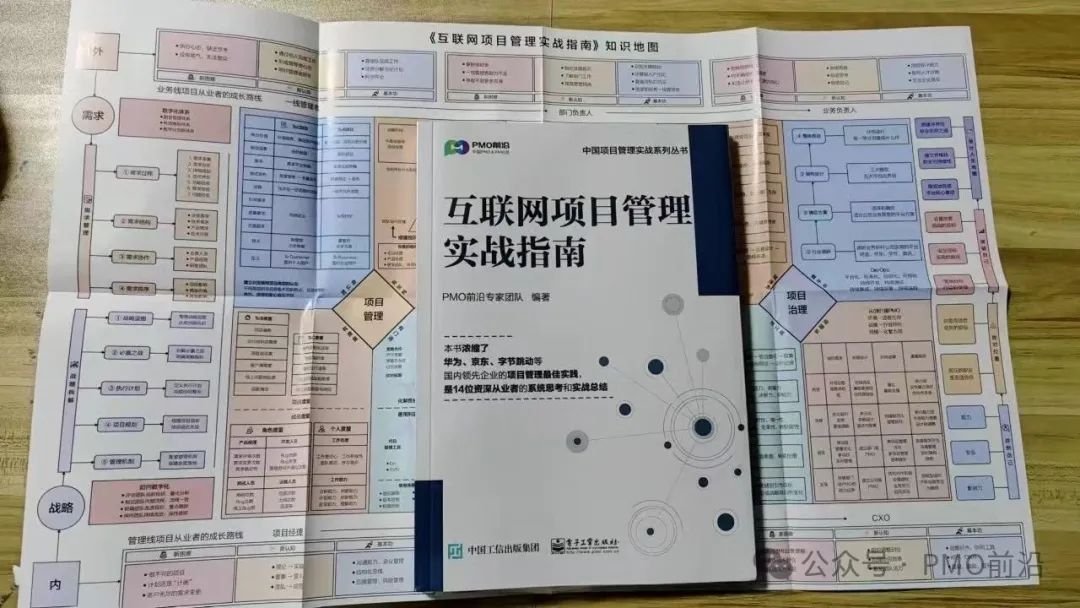
How do you systematically master the knowledge and experience of internet project management? I searched the market and found basically no books covering this area, so early last year we organized a group of experts from our Frontline community to jointly publish this new book, A Practical Guide to Internet Project Management, with the Publishing House of Electronics Industry, hoping it can give everyone a helping hand! Today I’m sharing the mind map takeaways from the article with you all!



The 17 lessons of internet project management. Communication is king.
- No matter how advanced the technology, without a good communication mechanism the project will hit bottlenecks. Make sure there are open communication channels between team members, and that everyone clearly understands their own responsibilities and the overall goals of the project. Priority above all else.
- Learn to distinguish which features are essential and which can be added later. Handle the features that matter most to users first. Short release cycles.
- By shortening the release cycle you can get user feedback faster, adjust direction in time, and reduce wasted resources. User feedback is gold - always stay in touch with users, collect their feedback, and respond quickly. This helps the product keep improving. Simplicity is beauty.
- Simplify the product’s design and features as much as possible, and avoid unnecessary complexity. Simple, easy-to-use products tend to be more popular. Quality control cannot be ignored.
- Run quality checks at every stage of the project to prevent small problems from piling up into big ones. Risk management must be done early - assess potential risks and work out corresponding response strategies, so you can solve them before they happen. Adjust plans flexibly.
- Plans can never keep up with change; learning to adjust the plan according to the actual situation during the project is very important. Team building matters.
- Invest in team-building activities to strengthen team cohesion and improve work efficiency. Choose technology carefully.
- When choosing a tech stack, consider long-term development, not just because a certain technology is currently popular. Data-driven decisions.
- Use data analysis to support product decisions, rather than relying on intuition alone. Value the user experience.
- User experience should run through the entire product lifecycle; from design to development to testing, user experience must be taken into account. Continuous learning and adaptation.
- Technology and the market are constantly changing, so continuously learning new knowledge and skills is necessary. Document important information.
- Make sure all key decisions and information are recorded - this is especially important for newly joined team members. Healthy work-life balance - encourage team members to maintain a good work-life balance; overwork only lowers productivity and innovation. Continuous integration/continuous deployment (CI/CD).
- Implementing a CI/CD process not only improves code quality but also accelerates the software release cycle. Transparency builds trust.
- Keep project progress transparent and report status to all stakeholders regularly; this builds trust and reduces misunderstandings.
Reprinted from: PMO前沿