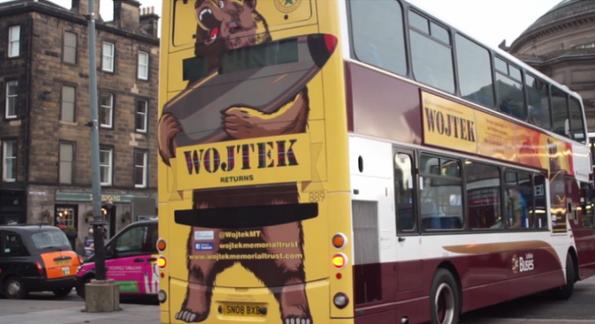
In Edinburgh there is a legend named Wojtek. I wonder if you’ve ever seen a bus with a Siberian brown bear clutching an artillery shell printed on it. That is the legendary Wojtek, who went to Iran, wrestled with Poles, could drink alcohol, served in the army, fought in World War II, carried artillery shells, punched Germans, and finally spent his later years in Edinburgh Zoo. (Source: Britain’s Those Things, Wikipedia, UK Daily Mail)
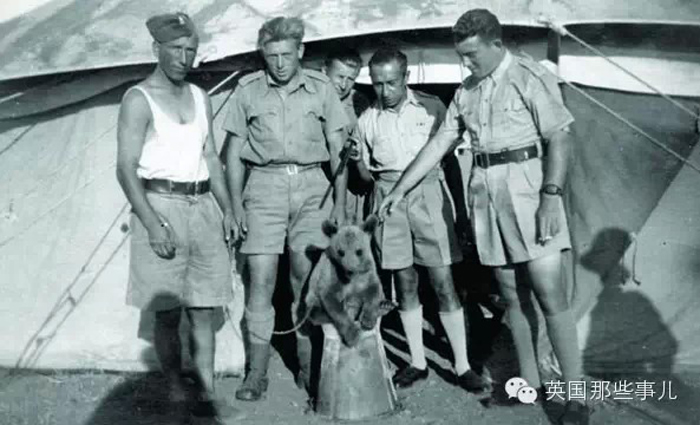
In 1942, a little boy living near Hamadan in Iran captured Wojtek, who had only just learned to toddle around, and resold him to the Polish troops stationed nearby. Thanks to his furry appearance and waddling gait, he became the favorite of the officers and soldiers at the camp as well as the locals nearby. At the time Wojtek was still a small cub, and since he wasn’t yet one year old, the soldiers only let him drink milk.
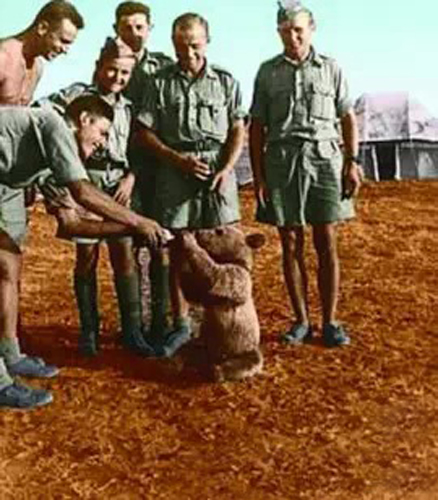
Later, the soldiers started giving him fruit, jam, honey and syrup to eat. Whatever the soldiers fed him, he ate — he was never picky. They even gave him a couple of sips when they were drinking, and he always thought it tasted great.
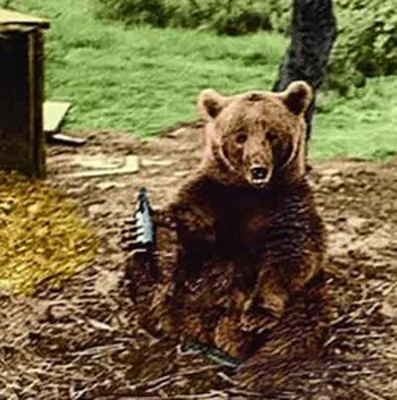
Over time, what with all the drinking, Wojtek grew this big.
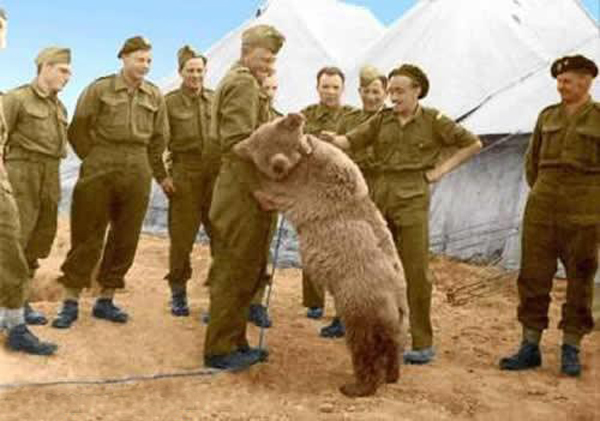
Wojtek played with the soldiers every day. Having grown up around people, he never thought of himself as a bear.
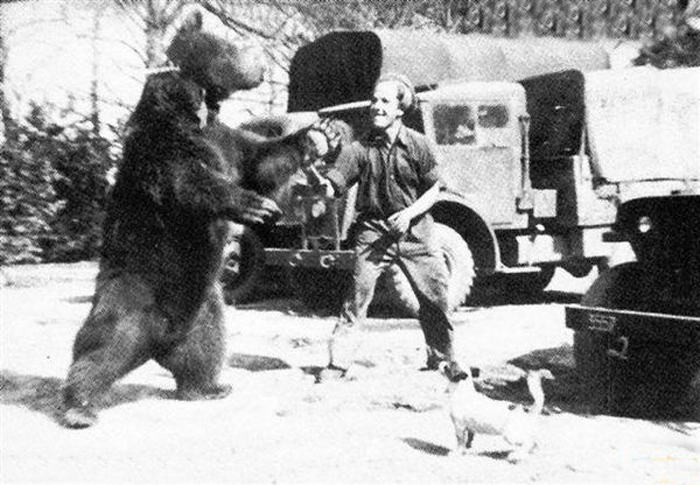
Whatever the soldiers did, he did too. In his free time his favorite thing was wrestling with the soldiers (because nobody could beat him).
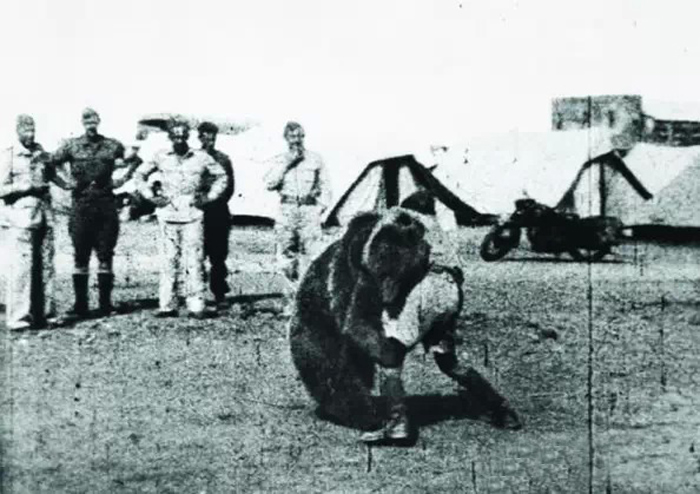
Wojtek wrestling with the soldiers.
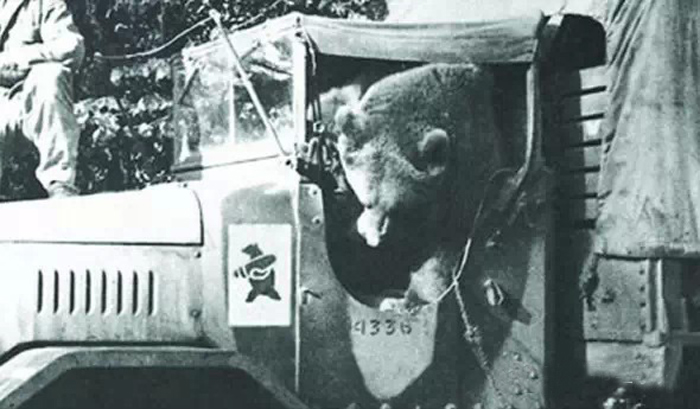
The soldiers took him everywhere they went, and he rather enjoyed riding in vehicles. When he had nothing to do he would suddenly stick his head out to scare people by the roadside, then pull it back beaming with delight. From then on, Wojtek followed the company as it redeployed from Iran to present-day Iraq, then moved on to Syria, pushed into Palestine, stopped over in Egypt, and finally reached southern Italy.
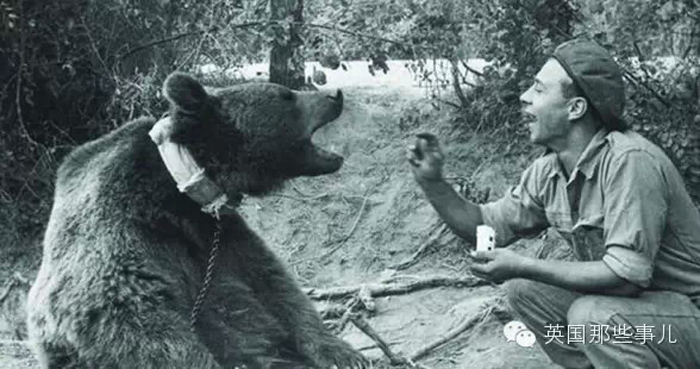
Until one day, the turning point in this brown bear’s fate arrived. The Polish soldiers were waiting at an Egyptian port to board a ship bound for Naples, where they would rendezvous with Italian troops after reaching Italy.
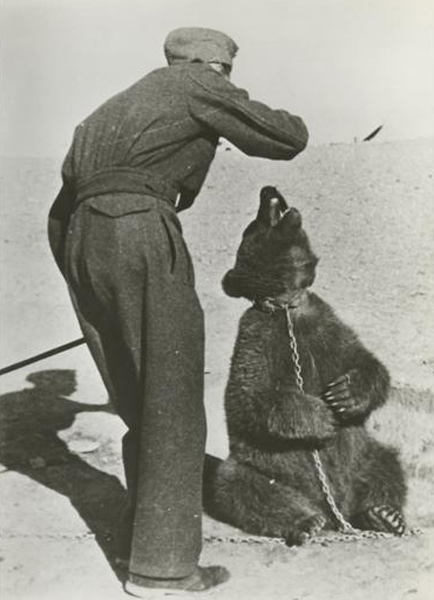
But the port commander, Alexandria, turned Wojtek away on the grounds that wild animals were not allowed on board, saying only formal servicemen could board. How could the Polish soldiers bear to abandon the brown bear they had raised with their own hands? So the idea of enlisting him in the army was born immediately.
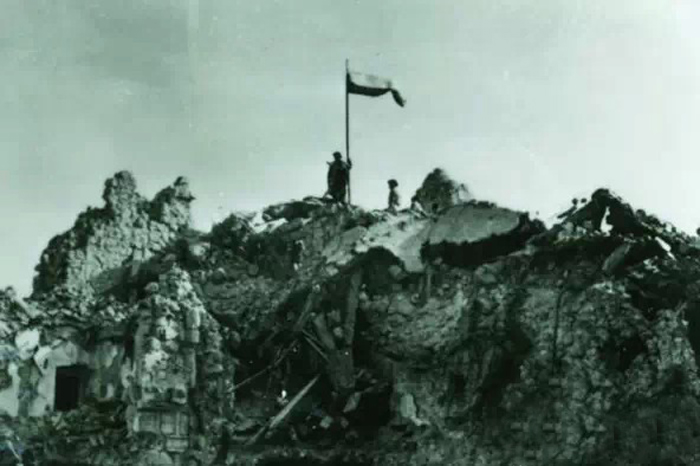
So the company commander listed him as a formal member of the unit, gave him the rank of private, and named him “Wojtek” (which in Polish means “he who enjoys war”). At the same time, they applied for a service number, rank and pay book for him. Nobody expected that Wojtek would actually be approved and entered onto the Polish army’s roster, becoming the only enlisted combat bear in the world.
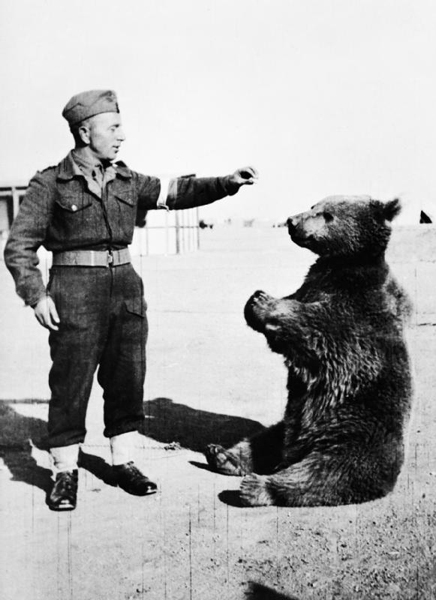
The soldiers’ greatest hope every day was to see Wojtek, who carried artillery shells and handled supplies, arrive at their position. Wojtek never once dropped any of the supplies he carried, nor was he ever frightened into a panic by gunfire or explosions.
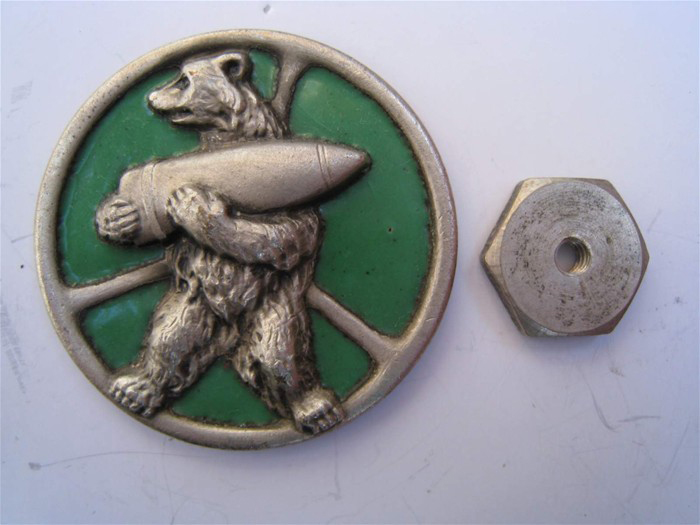
After this campaign, the soldiers were all moved, and the command headquarters specially commended him, changing the insignia of the 22nd Artillery Transport Company to Wojtek — Wojtek clutching an artillery shell. The unit was also renamed the 22nd Transport Company.
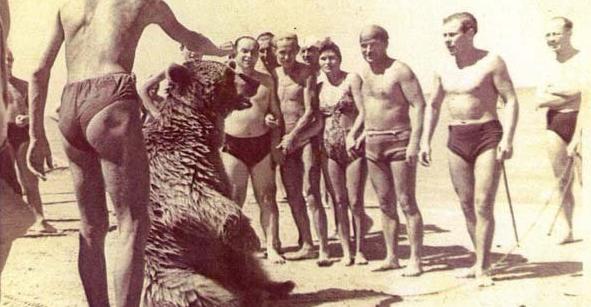
Later, in 1945, as World War II drew to a close, the 22nd Transport Company was redeployed to be stationed in the village of Hutton in Berwickshire, Scotland. Wojtek immediately won the affection of the local residents and media of Berwickshire, and the Polish-Scottish Cultural Association even granted him “honorary membership”. In 1947, as the Polish forces were demobilized and officers and soldiers returned home one after another, everyone had to bid him farewell with great reluctance, and Wojtek, left with no one to care for him, could only be sent to Edinburgh Zoo.
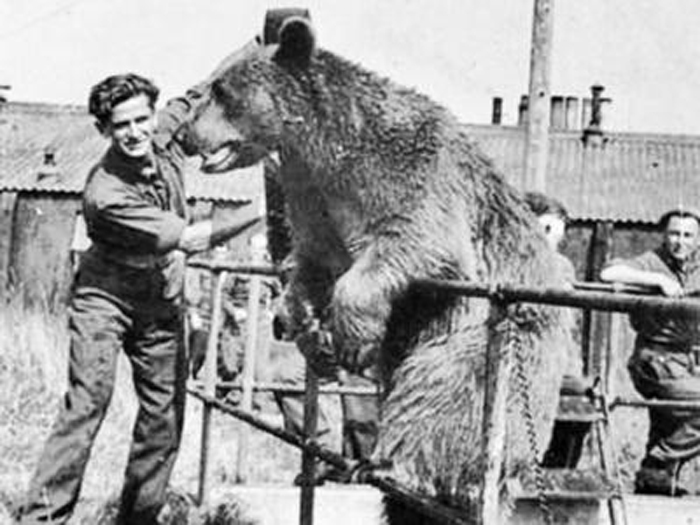
But in all the many, many years that followed, whenever Polish tourists greeted him in Polish, he would get all excited and wave his paws about. Former Polish veterans would also often come back to see him, give him a few bottles of liquor to drink, and even jump into the enclosure to wrestle with him — with no danger at all.
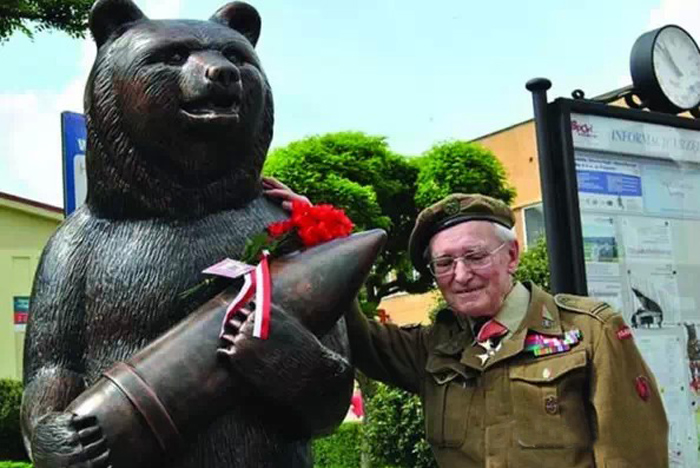
Wojtek was always the hero “bear” in the hearts of these Polish soldiers, and for that reason they made all kinds of sculptures of him. In December 1963, Wojtek left this world. In Edinburgh there is a legend named Wojtek. I wonder if you’ve ever seen a bus with a Siberian brown bear clutching an artillery shell printed on it. That is the legendary Wojtek, who went to Iran, wrestled with Poles, could drink alcohol, served in the army, fought in World War II, carried artillery shells, punched Germans, and finally spent his later years in Edinburgh Zoo. (Source: Britain’s Those Things, Wikipedia, UK Daily Mail)